

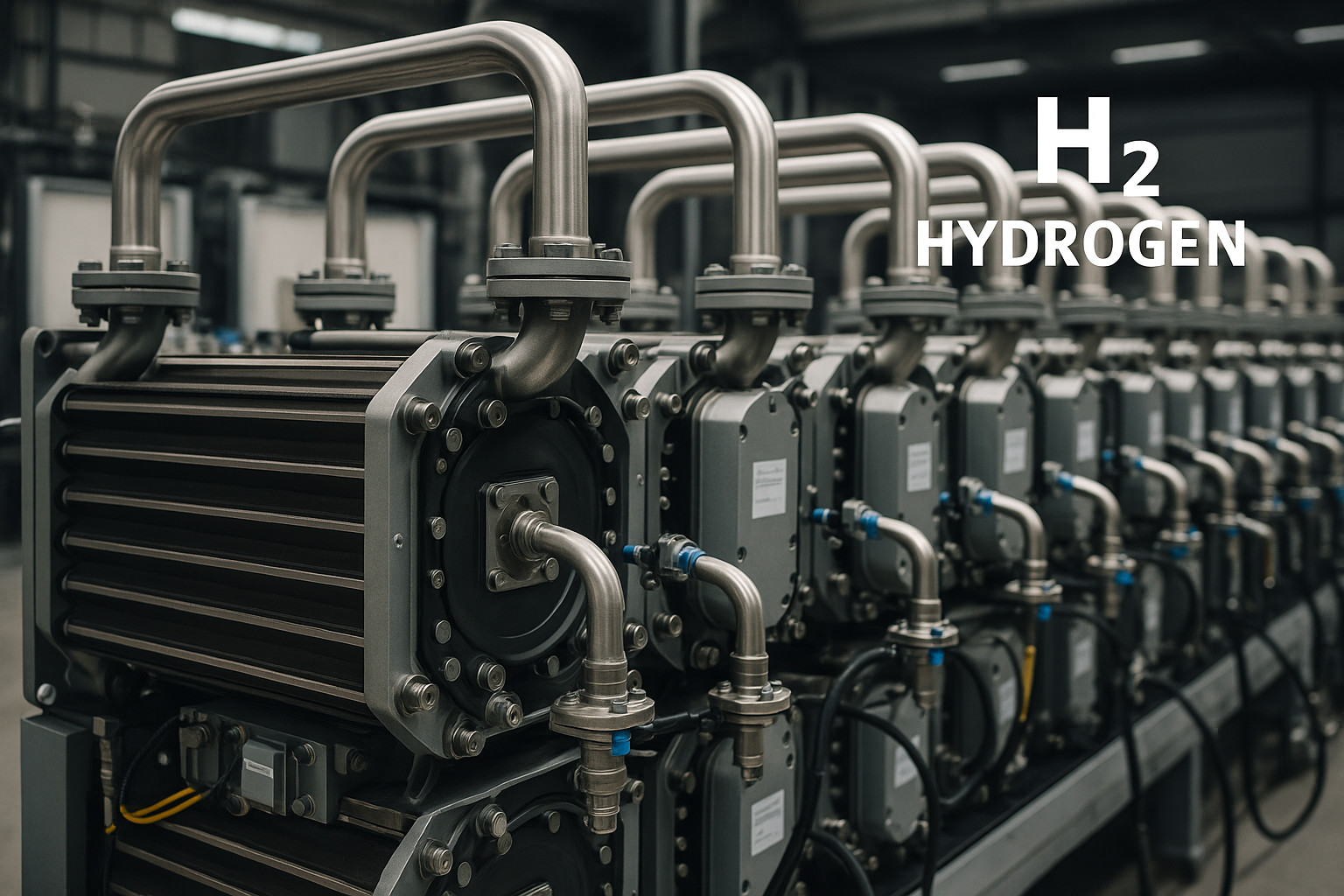
Hydrogen economics break at the interface.
Losses accumulate.
Kinetics slow.
Current density caps.
HPR drops.
Precious-metal dependence rises.
What changes
In generic AEM module builds using SS 316 (500-mesh) electrodes as baseline, nSD-H has demonstrated:
- ≥7× increase in exchange current density (J₀)
fundamental kinetics
not system tuning - multi-fold increases in hydrogen production rate (HPR)
dependent on membrane chemistry
operating regime
and stack design - zero reliance on precious or noble metals
no Pt- or Ir-class catalysts - ~12× slower current density decay rate
materially improved stability - cost parity with, or lower cost than,
the underlying substrate
In practice, these gains are realised at the electrode–membrane interface, where kinetics, durability, and catalyst cost directly set electrolyzer performance.
Illustrative representations shown. Performance claims are based on measured data; visuals are not to scale.
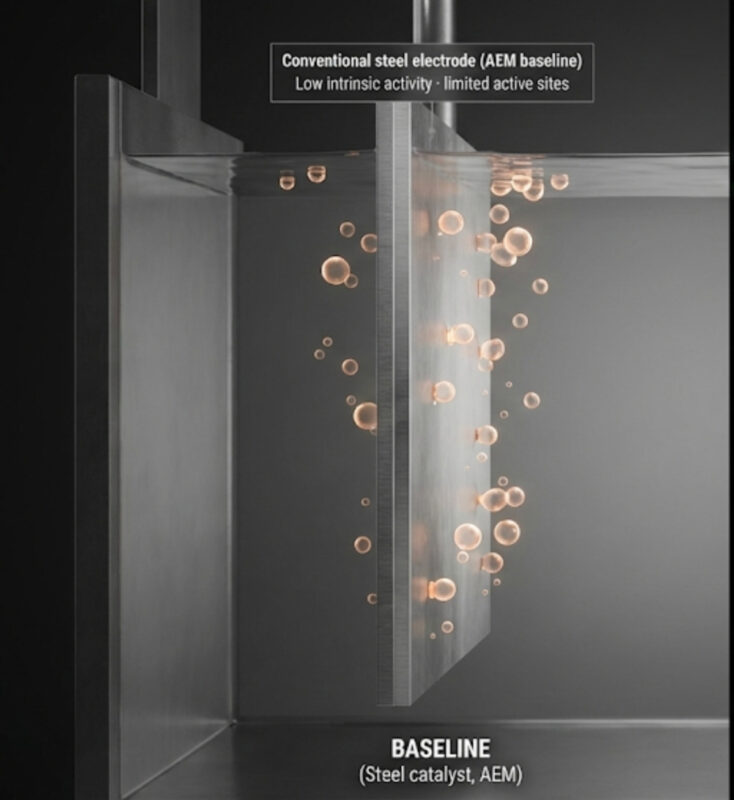
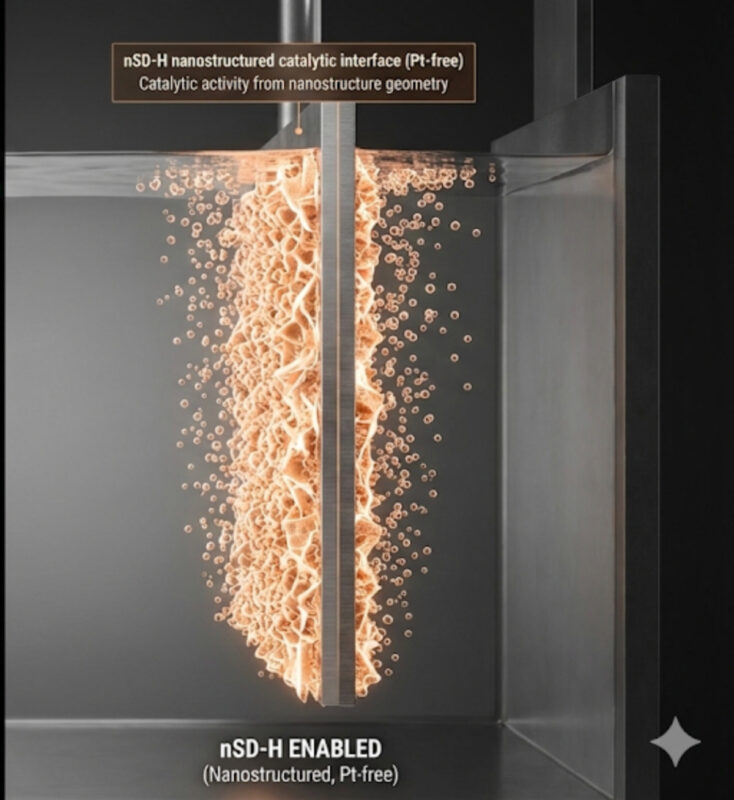
Left: Baseline AEM interface (steel electrode)
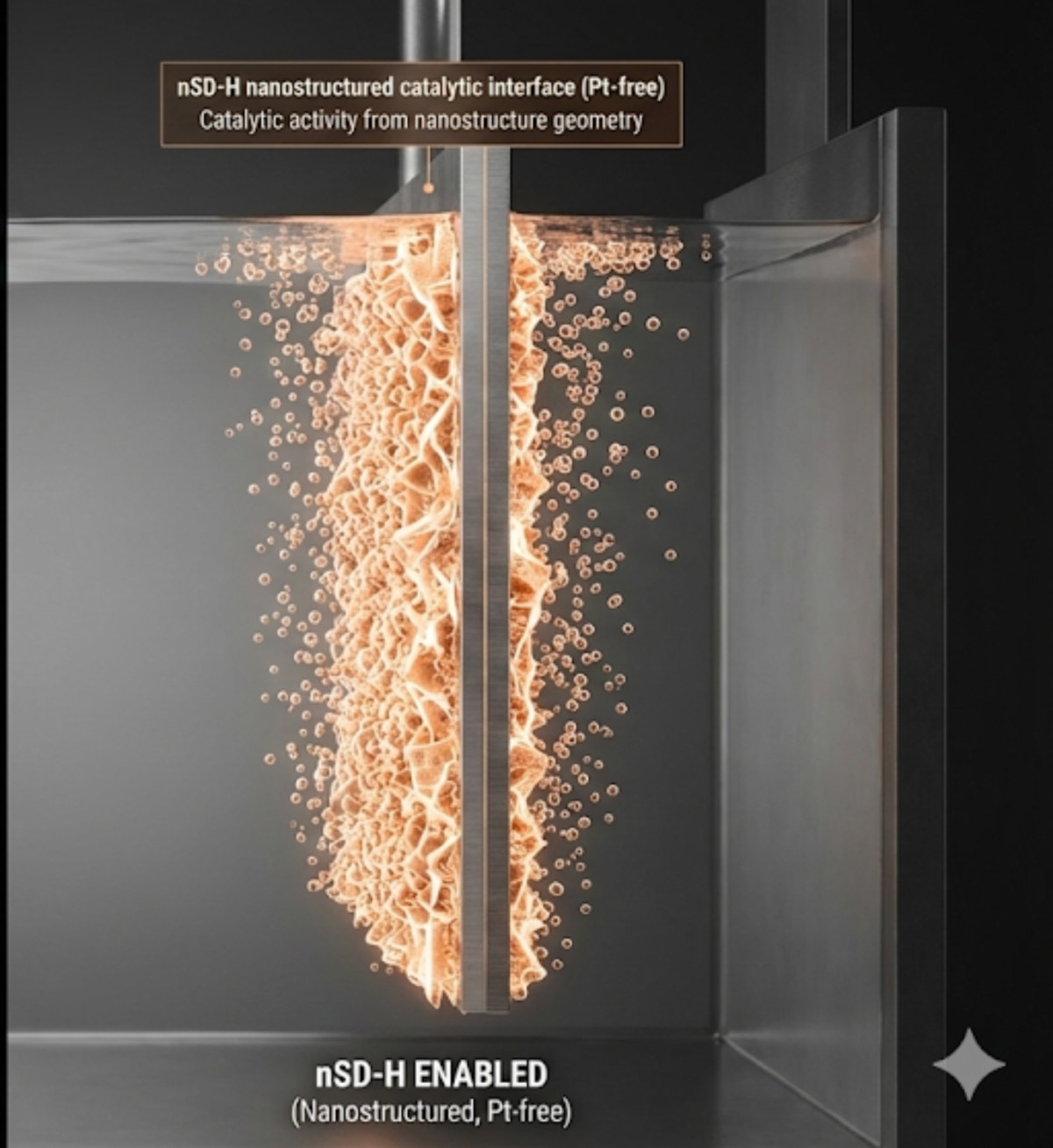
Right: nSD-H nanostructured catalytic interface (Pt-free)
The result
- higher output
- no precious metals
- longer life
Catalyst scarcity stops setting the ceiling.
What we do
Partners bring their electrolyzer designs.
Their membranes.
Their stack architectures.
We engineer nSD-H interface devices that redefine the reaction boundary.
We may:
- enhance a catalyst layer
- functionally replace it
- co-engineer the stack
We don’t sell catalysts.
We engineer the interface where kinetics, durability, and cost are set.
How it fits
- integrates into existing AEM architectures
- does not require full redesign
- evaluated through pilot modules before scale
Partners retain system ownership.
We reduce interface-driven cost, metals risk, and lifetime loss.
Flagship deployment:
Electrochemical interface layers embedded in AEM hydrogen stacks, replacing or augmenting catalyst layers without noble metals.