

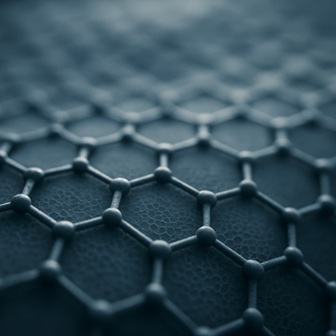
Diagnostics fail at the interface.
Sensitivity drops.
Power rises.
Drift accumulates.
What changes
Across internal testing and deployed diagnostic builds, our approach has demonstrated:
- near-zero / de minimis Rct
- high signal-to-noise ratios
minimal baseline drift - PCR-class limits of detection
without thermal cycling
or complex optics - near real-time analysis
minutes, not hours - cost parity with conventional electrode substrates
These outcomes are driven by interface behaviour at the sensing electrode, where charge transfer, noise, and drift determine diagnostic sensitivity.
Illustrative representations shown. Performance claims are based on measured data; visuals are not to scale.
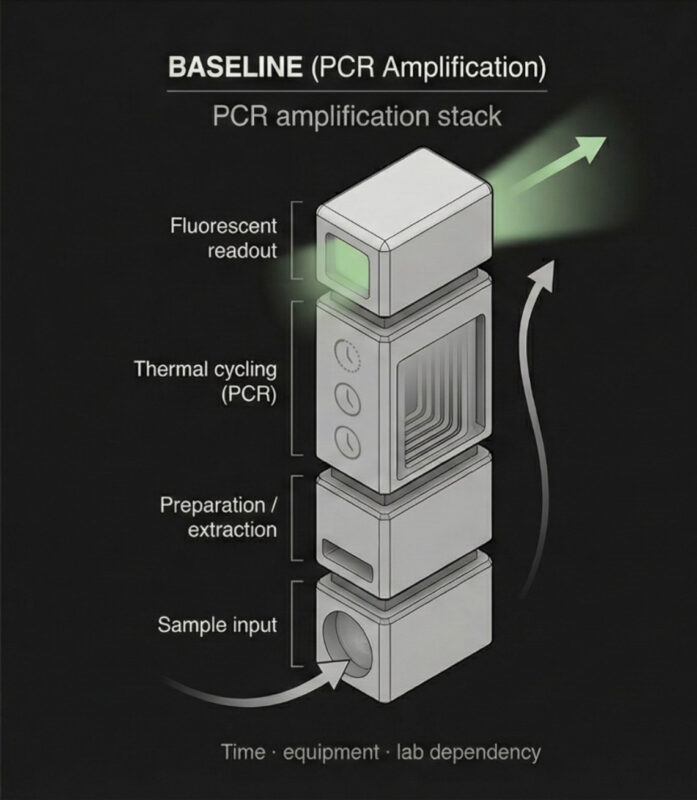
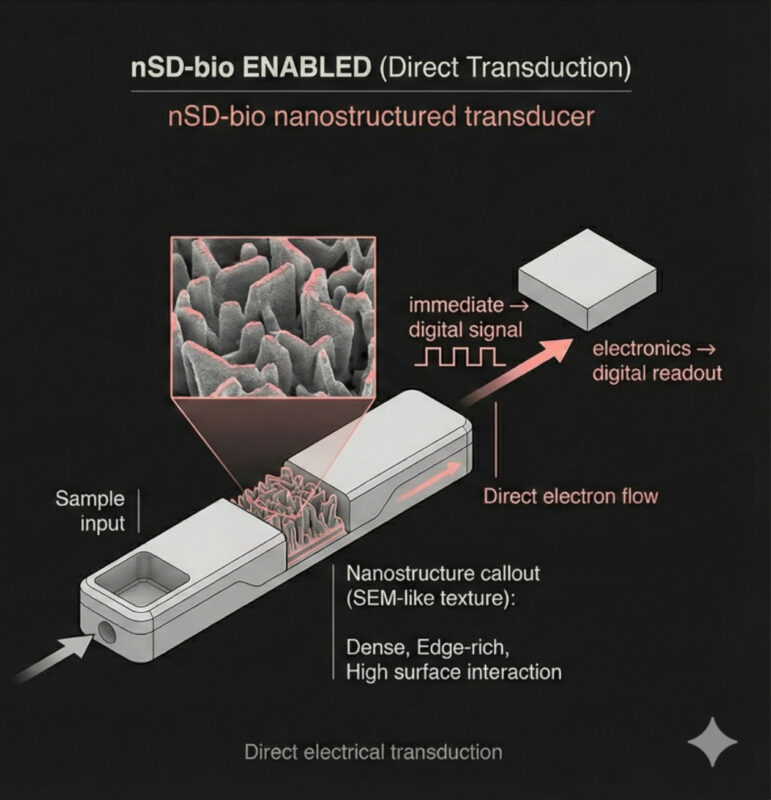
The result
- testing at a fraction of PCR cost
- no centralized lab infrastructure
PCR-class performance.
Portable.
Low power.
Where decisions actually happen.
What we do
Partners bring the biology.
Antibodies.
Assays.
Biomarkers.
We provide nSD-bio.
The bioelectronic interface.
We embed into existing platforms.
Or co-engineer the full stack.
Including SKUNKBOX Dx.
We don’t replace partner biology.
We build the interface layer.
And, when needed, the device stack.
How it fits
- integrates with partner assays and workflows
supports compact, field-ready devices - validated through lab and field pilots
Partners own the biology.
We engineer the interface.
Flagship deployment:
Sensing electrodes embedded in field-deployed diagnostic devices, including integrated platforms such as SKUNKBOX Dx.